Buy order-here.com ?
We are moving the project
order-here.com .
Are you interested in purchasing the domain
order-here.com ?
domain@kv-gmbh.de · 0541-91531010
Buy order-here.com ?
What is the difference between Past Perfect and Past Perfect Simple?
The Past Perfect and Past Perfect Simple are both verb tenses used to show an action that occurred before another action in the past. The Past Perfect Simple is used to emphasize the completion of an action before another action in the past, while the Past Perfect is used to show the duration of an action that was completed before another action in the past. In essence, the Past Perfect Simple focuses on the completion of an action, while the Past Perfect emphasizes the duration of the action. **
For the past: Simple past or present perfect?
The choice between simple past and present perfect depends on the specific context and the speaker's intention. Generally, the simple past is used to talk about a specific completed action or event that occurred at a definite time in the past. On the other hand, the present perfect is used to indicate a connection between the past and the present, emphasizing the relevance or impact of the past action on the present moment. So, if the focus is on a completed action with a specific time reference, simple past is more appropriate. If the focus is on the relevance of the past action to the present moment, present perfect is more suitable. **

Similar search terms for Past perfect
Top-Angebote
Products related to Past perfect:
-
Carla Valentine & Caitlin Doughty Past Mortems, From Here to Eternity, Smoke Gets in Your Eyes 3 Books Collection Set - Non Fiction - PaperbackTitles in This Set:. Past Mortems. From Here to Eternity. Smoke Gets in Your Eyes Condition: BRAND NEW. Format: Paperback Overview:. Three acclaimed non-fiction titles converge in this paperback collection, designed for readers who want a grounded, human understanding of death. Past Mortems by Carla Valentine invites readers behind the scenes of forensic pathology, sharing casework and insights into how autopsy informs our sense of life and loss. From Here to Eternity by Caitlin Doughty takes a global tour through funeral customs, exploring why cultures approach dying the way they do and how rituals shape meaning. Smoke Gets in Your Eyes by Caitlin Doughty offers a candid memoir of entering the mortuary world, blending wit with honesty as she reveals the realities of cremation, grief, and professional ethics. This trio is ideal for curious minds—students, general readers, and anyone seeking thoughtful, science-informed perspectives on mortality. A compact, giftable set for non-fiction lovers, classrooms, and book clubs alike. What Makes This Collection Special:. This collection brings together three distinct voices all anchored in real-world death work and cultural examination. Carla Valentine grounds the science with human stories from the morgue, while Caitlin Doughty broadens the lens to cultural practice and personal experience. The interplay between these voices creates a complete reading journey—from the practicalities of pathology to the rituals that give death context and meaning. Owning the full set means a cohesive reading arc, ideal for binge-reading, gifting, or library development for university courses, community groups, or BookTok discussions. The paperback format keeps the set approachable and portable, perfect for sharing with friends or study peers, and the UK edition cover ensures a premium, uniform look on shelves. Books Included in This Collection:. Past Mortems. Carla Valentine pulls back the curtain on the morgue, blending clinical detail with human empathy. In this book, you’ll encounter stories from her years in forensic pathology, offering a rare window into how death is investigated, understood, and described in plain language. It’s a compelling blend of science and humanity, designed to demystify autopsy work without sensationalism. A strong choice for readers curious about medical inquiry, forensic science, or the daily realities faced by those who work with the dead. From Here to Eternity. Caitlin Doughty guides readers through the world of death and funeral practice with warmth, curiosity, and a critical eye. Part reportage, part ethnography, it surveys burial and cremation traditions across cultures, challenging fears and inviting readers to rethink the rituals that surround dying. Accessible and thought-provoking, it’s ideal for students of anthropology, sociology, or medical humanities, as well as anyone who wants to understand end-of-life care beyond the headlines. Smoke Gets in Your Eyes. In this intimate...24,99 £*Shipping: 2,99 £Secure redirect to the provider
-
Julian Fellowes Collection 3 Books Set (Belgravia, Past Imperfect, Snobs) NEWDescription:. Condition: BRAND NEW. Format: Paperback. Belgravia:. It is the evening of 15 June 1815, and the Duchess of Richmond has thrown a magnificent ball in Brussels for the Duke of Wellington. The guests include James and Anne Trenchard - who have made their money in trade - along with their beautiful daughter Sophia.When the Trenchards move into the fashionable new area of Belgravia some twenty-five years later, they are surrounded by some of London society's most influential families. But something happened that night of the ball, so long ago, that threatens their new status.. Past Imperfect:. Damian Baxter is very, very rich. But he has but one concern, which is becoming more urgent at the weeks go by: who should inherit his fortune.A letter from an ex-girlfriend suggests that, as a young man, Damian may have fathered a child, but the letter is anonymous.Finding the truth will not be easy - and the only man who Damian can turn to for help also happens to be his sworn enemy.... Snobs:. The attractive only child of a middle-class accountant, she leaves behind her dull job in a Chelsea estate agents and manages to bag one of the most eligible bachelors of the day - Charles Broughton, heir to the Marquess of Uckfield.But is life amongst the upper echelons of 'good' society all that it seems?. Title. Julian Fellowes 3 Books Collection Set. Delivery. Content. Reviews99,99 £*Shipping: 0,00 £Secure redirect to the provider




-
What is the present (present tense), 1st past (simple past), 2nd past (present perfect), past perfect (pluperfect), and future (future tense)?
Present: I walk to school every day. 1st Past (Simple Past): Yesterday, I walked to school. 2nd Past (Present Perfect): I have walked to school many times. Past Perfect (Pluperfect): By the time I arrived, I had already walked to school. Future: Tomorrow, I will walk to school again. **
-
What is the present (present tense), 1st past (preterite), 2nd past (perfect), past perfect (pluperfect), and future (future)?
The present tense describes actions happening now or regularly. The 1st past, or preterite, describes actions that happened at a specific point in the past. The 2nd past, or perfect, describes actions that were completed in the past. The past perfect, or pluperfect, describes actions that were completed before another past action. The future tense describes actions that will happen in the future. **
-
What is the difference between Past Perfect and Past Progressive?
The Past Perfect tense is used to show that an action was completed before another action took place in the past. It is formed by using the auxiliary verb "had" followed by the past participle of the main verb. For example, "She had already finished her homework when her friends arrived." On the other hand, the Past Progressive tense is used to show that an action was ongoing or in progress at a specific point in the past. It is formed by using the past tense of the verb "to be" (was/were) followed by the present participle of the main verb. For example, "She was studying when her friends arrived." In summary, the Past Perfect tense is used to show the completion of an action before another action in the past, while the Past Progressive tense is used to show an ongoing action at a specific point in the past. **
-
I urgently need help with using Simple Past or Past Perfect.
Simple Past is used to describe actions that happened at a specific point in the past, while Past Perfect is used to show that one action happened before another action in the past. If you are talking about two actions that happened in the past and you want to show which one happened first, you should use Past Perfect for the action that occurred first. It's important to pay attention to the sequence of events when deciding whether to use Simple Past or Past Perfect in your sentences. **


Can you please explain the Simple Past and the Past Perfect?
The Simple Past tense is used to describe actions that were completed in the past at a specific time or for a specific duration. It is formed by adding "-ed" to regular verbs or using the past form of irregular verbs. For example, "I walked to the store yesterday." The Past Perfect tense is used to show that one action happened before another action in the past. It is formed by using "had" followed by the past participle of the verb. For example, "She had already eaten dinner when I arrived." In this sentence, the action of eating dinner (Past Perfect) happened before the action of arriving (Simple Past). **
What exercises are there for the Past Progressive and Past Perfect?
For the Past Progressive, exercises can include completing sentences with the correct form of the verb in the past progressive tense, or rewriting sentences in the past progressive tense. For the Past Perfect, exercises can involve filling in the blanks with the correct form of the verb in the past perfect tense, or creating sentences using the past perfect tense based on given prompts. Additionally, exercises can include identifying the correct tense to use in a given context, or creating a narrative using both past progressive and past perfect tenses. **
Top-Angebote
Products related to Past perfect:
-
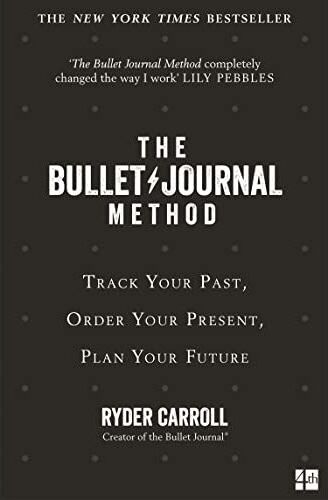
Fourth Estate The Bullet Journal Method: Track Your Past, Order Your Present, Plan Your FutureTHE NEW YORK TIMES BESTSELLER Transform your life using the Bullet Journal Method, the revolutionary organisational system and worldwide phenomenon. The Bullet Journal Method will undoubtedly transform your life, in more ways than you can imagine’ Hal Elrod, author of The Miracle Morning In his long-awaited first book, Ryder Carroll, the creator of the enormously popular Bullet Journal organisational system, explains how to use his method to: TRACK YOUR PAST: using nothing more than a pen and paper, create a clear, comprehensive, and organised record of your thoughts and goals. ORDER YOUR PRESENT: find daily calm by prioritising and minimising your workload and tackling your to-do list in a more mindful and productive way. PLAN YOUR FUTURE: establish and appraise your short-term and long-term goals, plan more complex projects simply and effectively, and live your life with meaning and purpose. Like many of us, Ryder Carroll tried everything to get organised – countless apps, systems, planners, you name it. Nothing really worked. Then he invented his own simple system that required only pen and paper, which he found both effective and calming. He shared his method with a few friends, and before long he had a worldwide viral movement. The system combines elements of a wishlist, a to-do list, and a diary. It helps you identify what matters and set goals accordingly. By breaking long-term goals into small actionable steps, users map out an approachable path towards continual improvement, allowing them to stay focused despite the crush of incoming demands. But this is much more than a time management book. It's also a manifesto for what Ryder calls "intentional living": making sure that your beliefs and actions align. Even if you already use a Bullet Journal, this book gives you new exercises to become more calm and focused, new insights on how to prioritise well, and a new awareness of the power of analogue tools in a digital world. *** This book has been printed with three different colour designs, black, Nordic blue and emerald. We are unable to accept requests for a specific cover. The different covers will be assigned to orders at random. ***8,99 £*Shipping: 2,99 £Secure redirect to the provider
-
Danielle Steel Collection 5 Books Set (Past Perfect, Loving, Fall From Grace, The Duchess, Fairytale)Description. oving. What if falling in love means learning who to trust?Bettina Daniels has it all. Pampered, adored and adorable, she has youth, beauty and the most glamorous of lifestyles. Everything her father's love, fame and money can buy.. Fall from Grace. Sydney Wells’ charmed life vanishes when her devoted husband dies suddenly. Widowed at forty-nine, she discovers that he has failed to include her in his will.. The Duchess. England, 1820. Angélique Latham grew up in her magnificent country house, Belgrave Castle with her father, the Duke of Westerfield, after the death of her mother. But when he dies, her half-brothers brutally deny her very existence and send her out into the world alone.. Fairytale. Camille Lammenais had a perfect childhood growing up in California’s beautiful Napa Valley, surrounded by acres of her family’s vineyards. Her parents, Christophe and Joy, still deeply in love after two decades of marriage, have built a renowned winery and chateau inspired by Christophe’s native Bordeaux.. Title. Danielle Steel Collection 5 Books Set (Past Perfect, Loving, Fall From Grace, The Duchess, Fairytale). Delivery. Content. Reviews99,99 £*Shipping: 0,00 £Secure redirect to the provider
-
Carla Valentine & Caitlin Doughty Past Mortems, From Here to Eternity, Smoke Gets in Your Eyes 3 Books Collection Set - Non Fiction - PaperbackTitles in This Set:. Past Mortems. From Here to Eternity. Smoke Gets in Your Eyes Condition: BRAND NEW. Format: Paperback Overview:. Three acclaimed non-fiction titles converge in this paperback collection, designed for readers who want a grounded, human understanding of death. Past Mortems by Carla Valentine invites readers behind the scenes of forensic pathology, sharing casework and insights into how autopsy informs our sense of life and loss. From Here to Eternity by Caitlin Doughty takes a global tour through funeral customs, exploring why cultures approach dying the way they do and how rituals shape meaning. Smoke Gets in Your Eyes by Caitlin Doughty offers a candid memoir of entering the mortuary world, blending wit with honesty as she reveals the realities of cremation, grief, and professional ethics. This trio is ideal for curious minds—students, general readers, and anyone seeking thoughtful, science-informed perspectives on mortality. A compact, giftable set for non-fiction lovers, classrooms, and book clubs alike. What Makes This Collection Special:. This collection brings together three distinct voices all anchored in real-world death work and cultural examination. Carla Valentine grounds the science with human stories from the morgue, while Caitlin Doughty broadens the lens to cultural practice and personal experience. The interplay between these voices creates a complete reading journey—from the practicalities of pathology to the rituals that give death context and meaning. Owning the full set means a cohesive reading arc, ideal for binge-reading, gifting, or library development for university courses, community groups, or BookTok discussions. The paperback format keeps the set approachable and portable, perfect for sharing with friends or study peers, and the UK edition cover ensures a premium, uniform look on shelves. Books Included in This Collection:. Past Mortems. Carla Valentine pulls back the curtain on the morgue, blending clinical detail with human empathy. In this book, you’ll encounter stories from her years in forensic pathology, offering a rare window into how death is investigated, understood, and described in plain language. It’s a compelling blend of science and humanity, designed to demystify autopsy work without sensationalism. A strong choice for readers curious about medical inquiry, forensic science, or the daily realities faced by those who work with the dead. From Here to Eternity. Caitlin Doughty guides readers through the world of death and funeral practice with warmth, curiosity, and a critical eye. Part reportage, part ethnography, it surveys burial and cremation traditions across cultures, challenging fears and inviting readers to rethink the rituals that surround dying. Accessible and thought-provoking, it’s ideal for students of anthropology, sociology, or medical humanities, as well as anyone who wants to understand end-of-life care beyond the headlines. Smoke Gets in Your Eyes. In this intimate...24,99 £*Shipping: 2,99 £Secure redirect to the provider
-
What is the difference between Past Perfect and Past Perfect Simple?
The Past Perfect and Past Perfect Simple are both verb tenses used to show an action that occurred before another action in the past. The Past Perfect Simple is used to emphasize the completion of an action before another action in the past, while the Past Perfect is used to show the duration of an action that was completed before another action in the past. In essence, the Past Perfect Simple focuses on the completion of an action, while the Past Perfect emphasizes the duration of the action. **
-
For the past: Simple past or present perfect?
The choice between simple past and present perfect depends on the specific context and the speaker's intention. Generally, the simple past is used to talk about a specific completed action or event that occurred at a definite time in the past. On the other hand, the present perfect is used to indicate a connection between the past and the present, emphasizing the relevance or impact of the past action on the present moment. So, if the focus is on a completed action with a specific time reference, simple past is more appropriate. If the focus is on the relevance of the past action to the present moment, present perfect is more suitable. **
-
What is the present (present tense), 1st past (simple past), 2nd past (present perfect), past perfect (pluperfect), and future (future tense)?
Present: I walk to school every day. 1st Past (Simple Past): Yesterday, I walked to school. 2nd Past (Present Perfect): I have walked to school many times. Past Perfect (Pluperfect): By the time I arrived, I had already walked to school. Future: Tomorrow, I will walk to school again. **
-
What is the present (present tense), 1st past (preterite), 2nd past (perfect), past perfect (pluperfect), and future (future)?
The present tense describes actions happening now or regularly. The 1st past, or preterite, describes actions that happened at a specific point in the past. The 2nd past, or perfect, describes actions that were completed in the past. The past perfect, or pluperfect, describes actions that were completed before another past action. The future tense describes actions that will happen in the future. **
Similar search terms for Past perfect
-
Julian Fellowes Collection 3 Books Set (Belgravia, Past Imperfect, Snobs) NEWDescription:. Condition: BRAND NEW. Format: Paperback. Belgravia:. It is the evening of 15 June 1815, and the Duchess of Richmond has thrown a magnificent ball in Brussels for the Duke of Wellington. The guests include James and Anne Trenchard - who have made their money in trade - along with their beautiful daughter Sophia.When the Trenchards move into the fashionable new area of Belgravia some twenty-five years later, they are surrounded by some of London society's most influential families. But something happened that night of the ball, so long ago, that threatens their new status.. Past Imperfect:. Damian Baxter is very, very rich. But he has but one concern, which is becoming more urgent at the weeks go by: who should inherit his fortune.A letter from an ex-girlfriend suggests that, as a young man, Damian may have fathered a child, but the letter is anonymous.Finding the truth will not be easy - and the only man who Damian can turn to for help also happens to be his sworn enemy.... Snobs:. The attractive only child of a middle-class accountant, she leaves behind her dull job in a Chelsea estate agents and manages to bag one of the most eligible bachelors of the day - Charles Broughton, heir to the Marquess of Uckfield.But is life amongst the upper echelons of 'good' society all that it seems?. Title. Julian Fellowes 3 Books Collection Set. Delivery. Content. Reviews99,99 £*Shipping: 0,00 £Secure redirect to the provider
-
Cardboard Alchemy Flamecraft: Dragons of the Past Promo Pack - Flamecraft - Promotional PackExpand your Flamecraft collection with a set of promotional content celebrating the game's earlier releases. The Dragons of the Past Promo Pack brings together the Flamecraft promos from the Kickstarter campaign, along with additional promotional material released afterwards. Designed for owners of Flamecraft, this pack adds extra content to your existing game and offers more ways to enrich your visits to the town's charming shops. It is a compact addition for fans who want to collect the promotional elements associated with the game. Product details: - Official Flamecraft promotional pack - Collects past Kickstarter promotional content - Includes additional later-release promos - Designed for use with Flamecraft - Compact retail pack measuring approximately 15 × 10 × 1.1 cm This is promotional expansion content and is intended for players who already own the base Flamecraft game.9,99 £*Shipping: 3,95 £Secure redirect to the provider
-
Roger Fisher 2 books Collection Set Getting Past No,Getting to YesDescription. Getting Past No. How can you negotiate successfully with a stubborn boss, an irate customer, or a deceitful coworker?. In Getting Past No, William Ury of Harvard Law School's Program on Negotiation offers a proven breakthrough strategy for turning adversaries into negotiating partners. You'll learn how to:. Getting to Yes. Getting to Yes has been in print for over thirty years. This timeless classic has helped millions of people secure win-win agreements both at work and in their private lives. Founded on principles such as:. · Don't bargain over positions. . Separate the people from the problem. · Insist on objective criteria. Getting to Yes simplifies the whole negotiation process, offering a highly effective framework that will ensure success.. Title. Roger Fisher 2 books Collection Set Getting Past No,Getting to Yes. Delivery. Content. Reviews19,99 £*Shipping: 2,99 £Secure redirect to the provider
-
What is the difference between Past Perfect and Past Progressive?
The Past Perfect tense is used to show that an action was completed before another action took place in the past. It is formed by using the auxiliary verb "had" followed by the past participle of the main verb. For example, "She had already finished her homework when her friends arrived." On the other hand, the Past Progressive tense is used to show that an action was ongoing or in progress at a specific point in the past. It is formed by using the past tense of the verb "to be" (was/were) followed by the present participle of the main verb. For example, "She was studying when her friends arrived." In summary, the Past Perfect tense is used to show the completion of an action before another action in the past, while the Past Progressive tense is used to show an ongoing action at a specific point in the past. **
-
I urgently need help with using Simple Past or Past Perfect.
Simple Past is used to describe actions that happened at a specific point in the past, while Past Perfect is used to show that one action happened before another action in the past. If you are talking about two actions that happened in the past and you want to show which one happened first, you should use Past Perfect for the action that occurred first. It's important to pay attention to the sequence of events when deciding whether to use Simple Past or Past Perfect in your sentences. **
-
Can you please explain the Simple Past and the Past Perfect?
The Simple Past tense is used to describe actions that were completed in the past at a specific time or for a specific duration. It is formed by adding "-ed" to regular verbs or using the past form of irregular verbs. For example, "I walked to the store yesterday." The Past Perfect tense is used to show that one action happened before another action in the past. It is formed by using "had" followed by the past participle of the verb. For example, "She had already eaten dinner when I arrived." In this sentence, the action of eating dinner (Past Perfect) happened before the action of arriving (Simple Past). **
-
What exercises are there for the Past Progressive and Past Perfect?
For the Past Progressive, exercises can include completing sentences with the correct form of the verb in the past progressive tense, or rewriting sentences in the past progressive tense. For the Past Perfect, exercises can involve filling in the blanks with the correct form of the verb in the past perfect tense, or creating sentences using the past perfect tense based on given prompts. Additionally, exercises can include identifying the correct tense to use in a given context, or creating a narrative using both past progressive and past perfect tenses. **
* All prices are inclusive of VAT and, if applicable, plus shipping costs. The offer information is based on the details provided by the respective shop and is updated through automated processes. Real-time updates do not occur, so deviations can occur in individual cases. ** Note: Parts of this content were created by AI.